

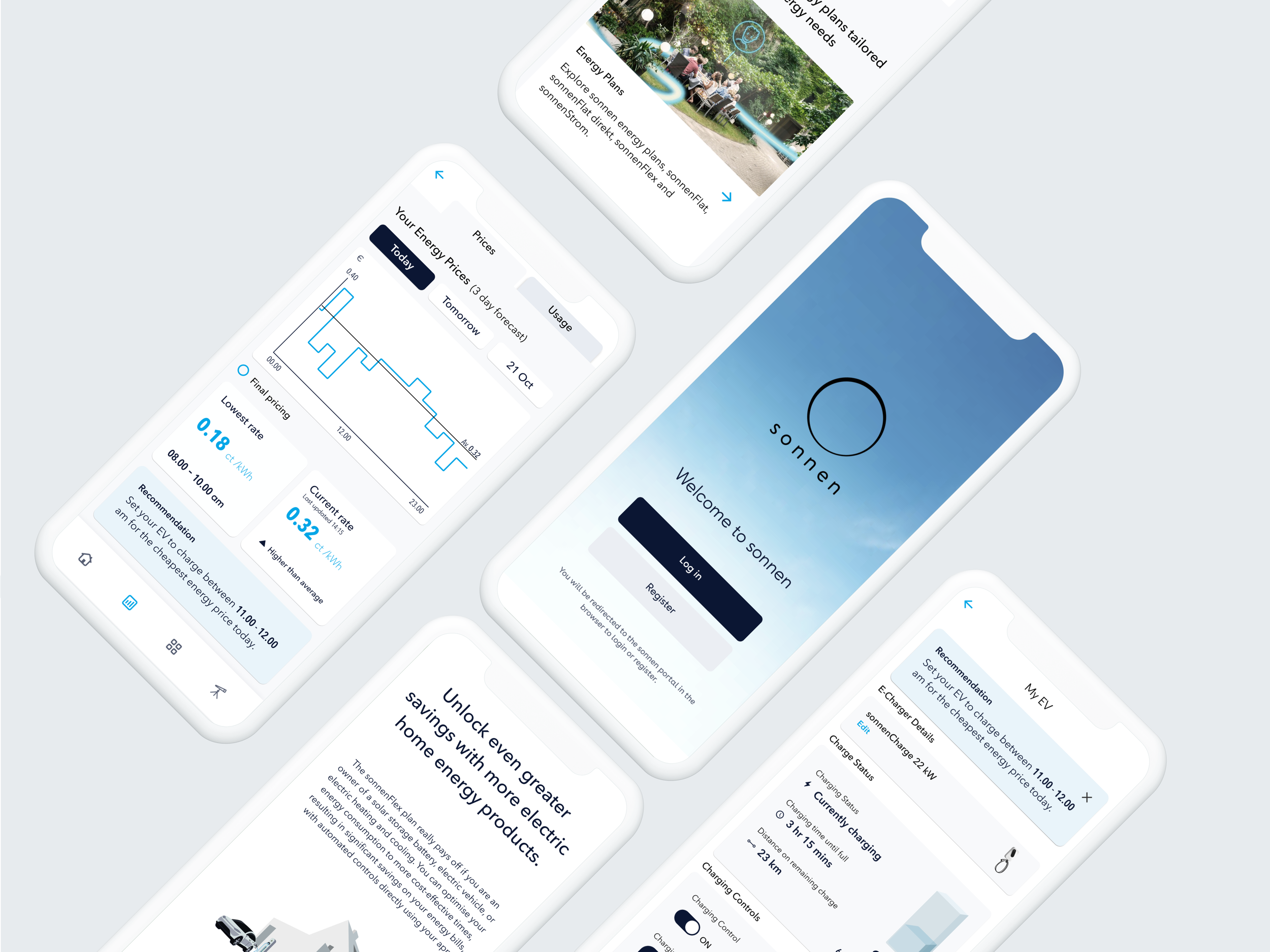
Introducing a new dynamic energy tariff
Client
sonnen gmbh (Germany)
Time
2 months
Activities
Competitor Analysis, Market Research, User Personas, UI, Prototyping, Moderated user-testing, Unmoderated user-testing
Team
Product Designer, Product Strategist, Product Owners, Creative Director
Background
sonnen is a leader in producing home energy storage systems for homes and small businesses. Having worked in parallel with some of the team there during my time on the Shell Energy Assistant, the sonnen team requested that I join them for a small research and discovery project that would help them prepare for the implementation of the same larger project happening in 2024.
This project was based around their energy tariff offerings. With the impending 2024 EU mandate for energy providers to adopt a 'dynamic/flexible' tariff, sonnen aimed to offer this option to their customers too. My job involved delving into how users would discover, comprehend, and integrate this tariff into their daily routines using the sonnen app.
Note - This was a creative exploration project, the visuals are conceptual and not final UI, and no development was done. A concise team of just myself and a product owner consulted with key leaders at sonnen for alignment with their vision. The aim of the project was to provide sonnen with testing insights and results so that the full project could be planned out for 2024.

User Problem/Brief
Customers who own sonnen products, including storage batteries, or other home energy products including solar panels, heat storage batteries etc, can currently benefit from static (fixed-rate) energy tariffs from sonnen, which can help maximise their savings as these plans are tailored for these home asset owners.
But introduction of dynamic pricing (mandated in 2024), creates an opportunity for even greater control over energy bills. With dynamic pricing, the fluctuating energy prices change based on demand throughout the day and night, so users have the potential to further optimise costs and make big savings.
As this concept is novel for many users, the main objective for my brief was to test and evaluate user understanding of the dynamic pricing model. I also wanted to explore how having any eco-home assets, like solar panels or an EV charger also offered by sonnen, could make the dynamic dynamic tariff more attractive to customers.
Deliverables
• A tried and tested marketing landing page for the energy tariff with checkout page
• A suggested integration of the dynamic tariff as a feature in the sonnen mobile app
A 5-week sprint
This was a 5-week sprint that aimed to design, test, and derive key learnings within a condensed timeframe. The sprint was tightly structured with specific deliverables scheduled for each week.





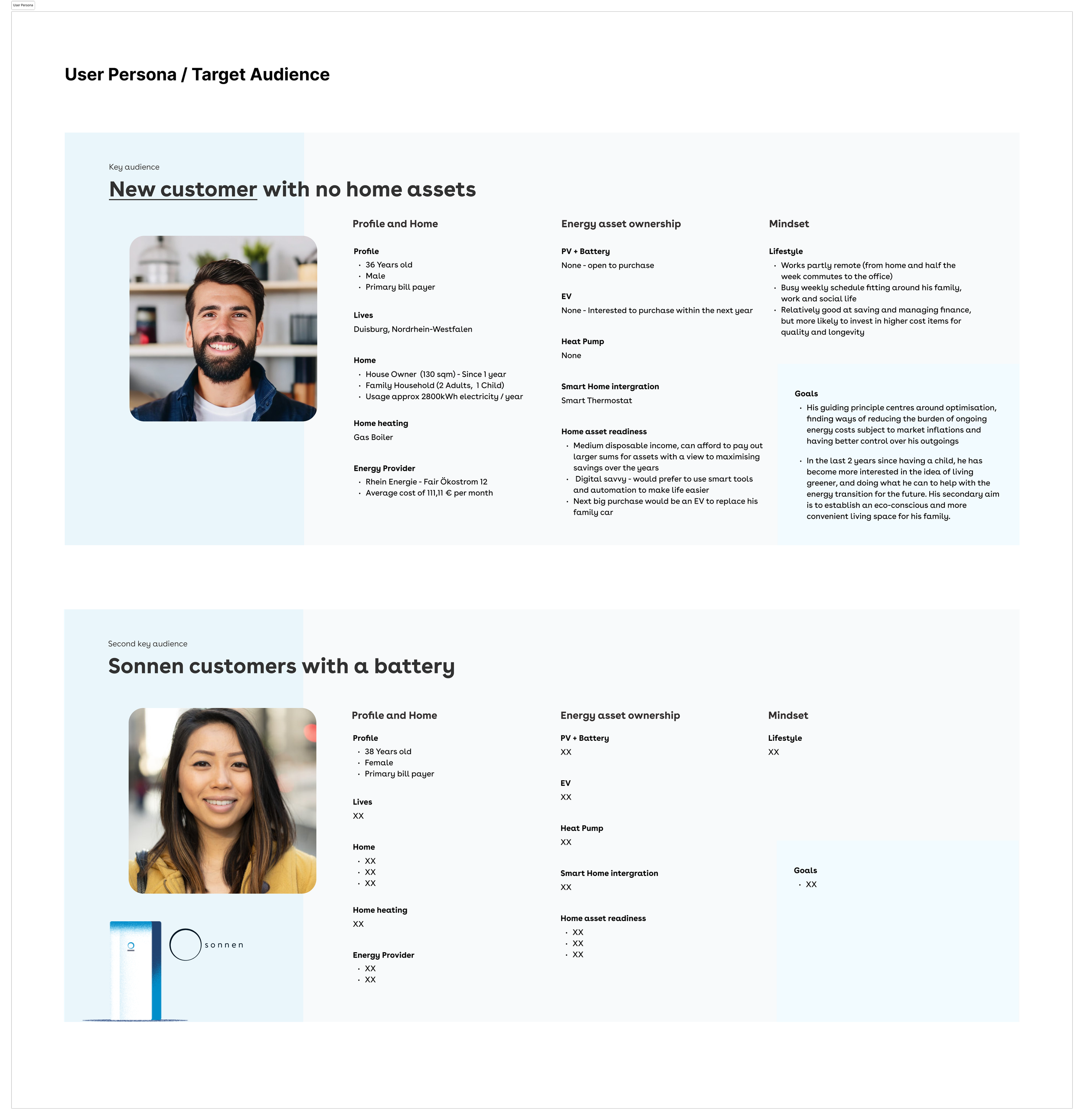
Understand sonnen’s user groups
Targeting sonnen's largest user group, the owners of sonnen storage batteries, seemed logical given the size of this customer base, but the time constraints of the project and the added complexities associated with self-energy production at home led us to lean towards a different target audience: those without any sonnen assets.
This untapped group presented an opportunity to expand sonnen's customer base by introducing them to the benefits of the dynamic tariff offering. It provided an accessible entry point for individuals who might be interested in joining sonnen without the initial investment in substantial home assets like solar panels or storage batteries.
This decision meant designing a marketing page more specifically for 'new or prospective' customers, and it also meant that we had to create a repurposed app, because the current app was tailored for sonnen’s storage battery owners.

Initial research
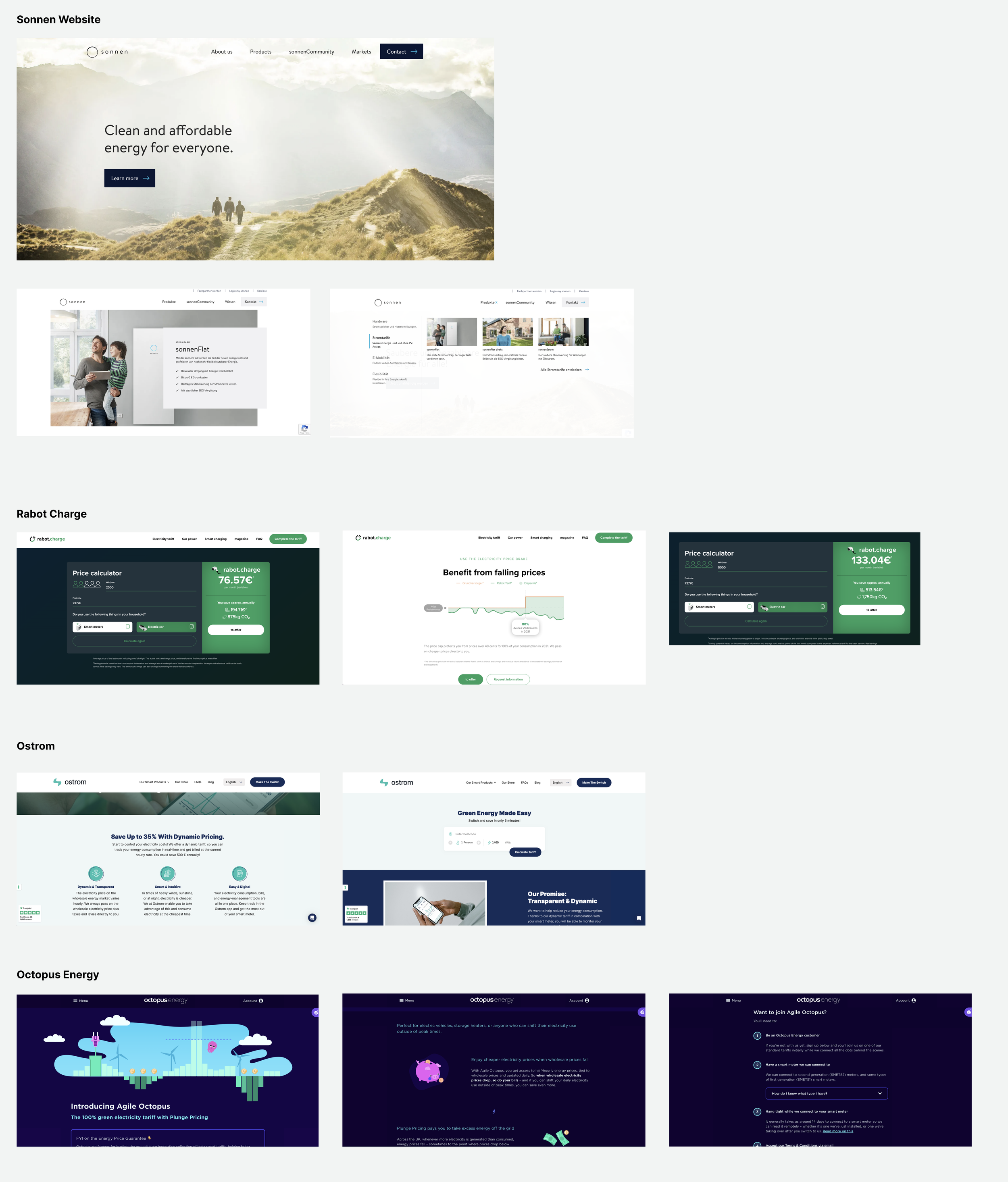
My research journey started with an exploration of various energy companies, aiming to understand their approaches in presenting tariffs and the associated benefits to their customers. I came across a few examples from competitors showing familiar tariff structures like fixed rates or off-peak tariffs.
But I wanted to look more specifically at instances of companies pioneering the concept of flexible tariffs, as I wanted to better understand how this new pricing model was communicated to customers. As well as the websites where customers might start their journey, I looked also to any existing apps or app concepts that do this too, even better where have active users. I was able to find a few examples of existing designs already out there on market which provided a great starting point, for instance from Ostrom and Octopus Energy.
Combining both the learnings from the competitor analysis and the several insights and interviews from the product teams at sonnen, we had a good understanding for what the marketing page needed to provide in terms of content, information and features.
These included things like:
- Intro to the tariff
- Key benefits
- Price comparisons
- Customer stories
- Educative content - how a dynamic tariff works
Creating a compelling marketing story
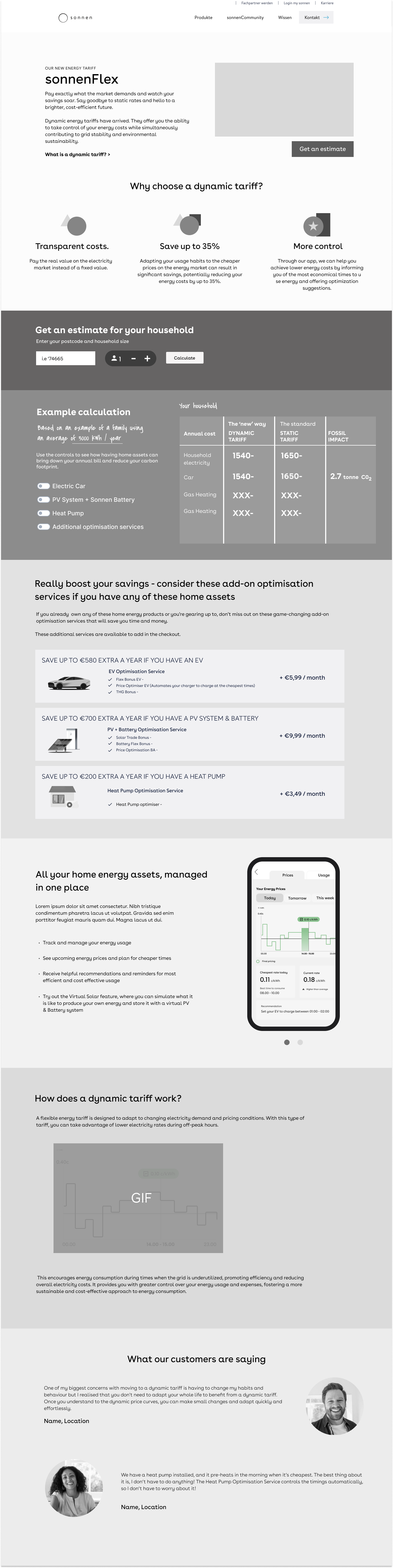
The marketing page will be one of the first steps to finding out about this tariff, for the user-group we were targeting. Based on research insights and initial requirements, I created three versions, each with distinct marketing angles: tariff comparison, educational content, and price analysis. The aim of this was to gauge from the users what kind of information was most important to them, to get their attention and of course to encourage conversion.
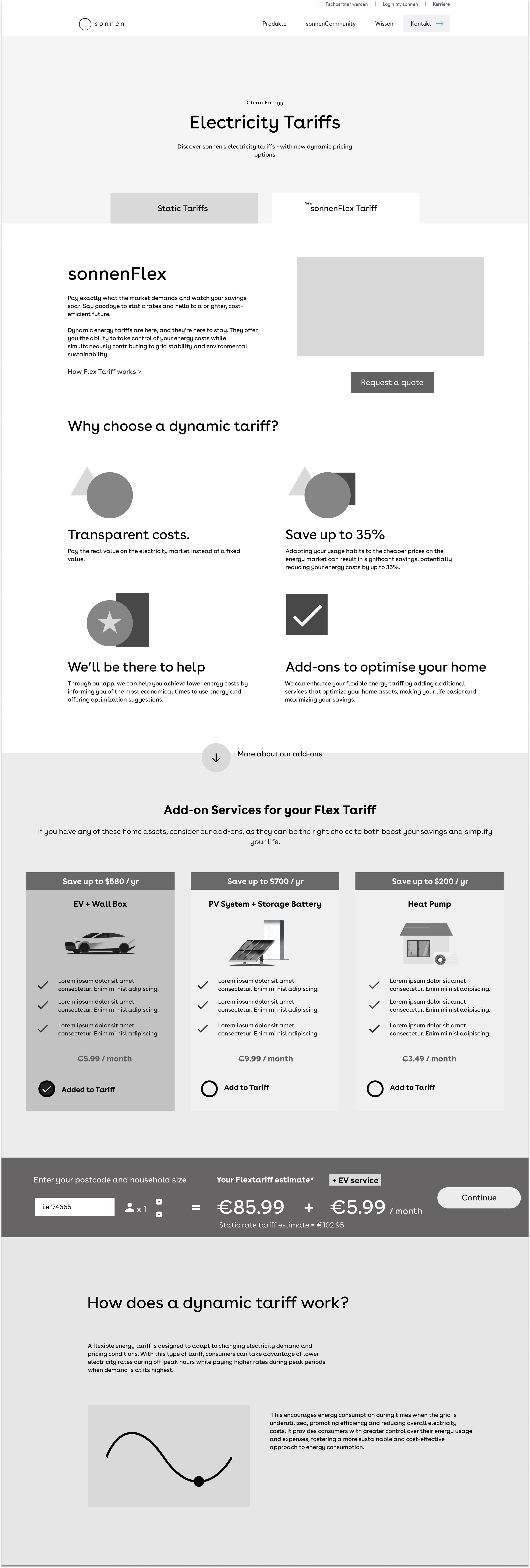
Design 1 (first image)
Key concept - Comparing the benefits of a dynamic tariff to a static tariff
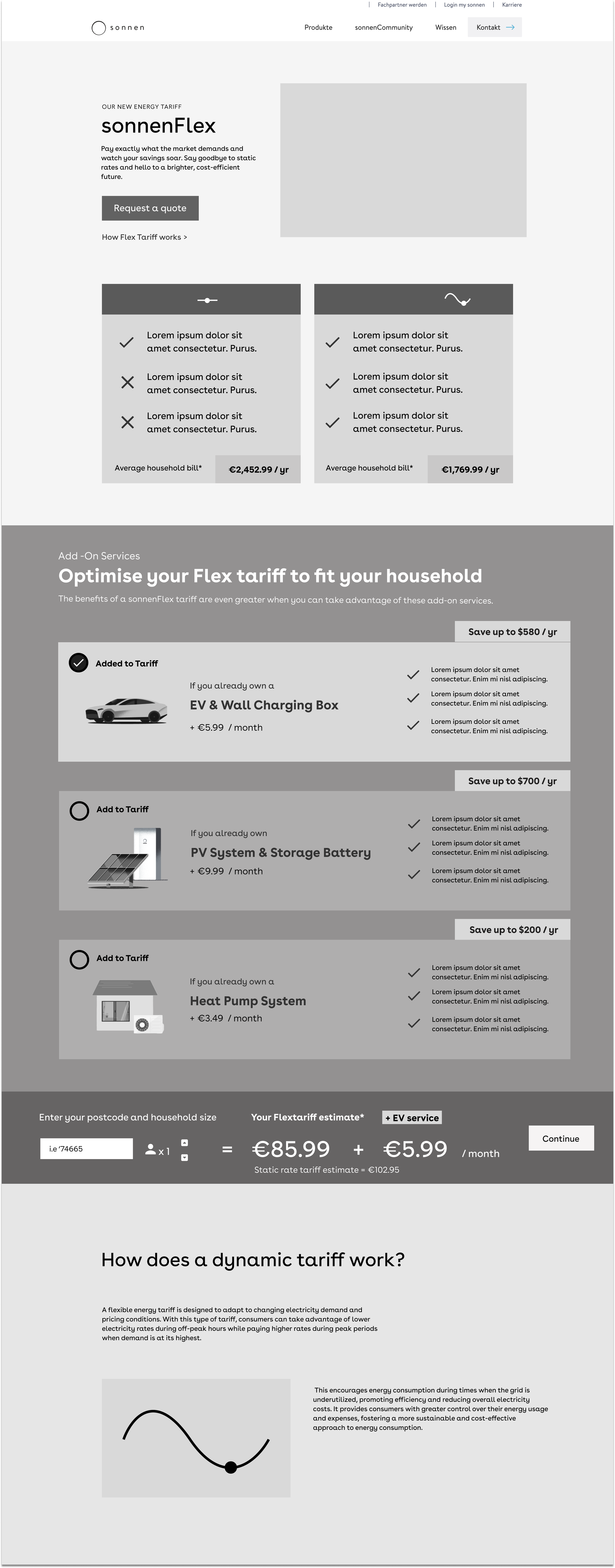
Design 2 (second image)
Key concept - Focus on educating the customer about what a dynamic tariff is and how it works
Design 3 (third image)
Key concept - Centre on on the direct price comparisons and savings
Revamping the app design
The initial plan was to incorporate dynamic pricing into sonnen's existing app. However, the live app was exclusively tailored for sonnen battery owners, centred around energy production data, which didn't align with our target audience's needs. To cater to new sonnen users without home assets, we made some big changes, (just for testing purposes).
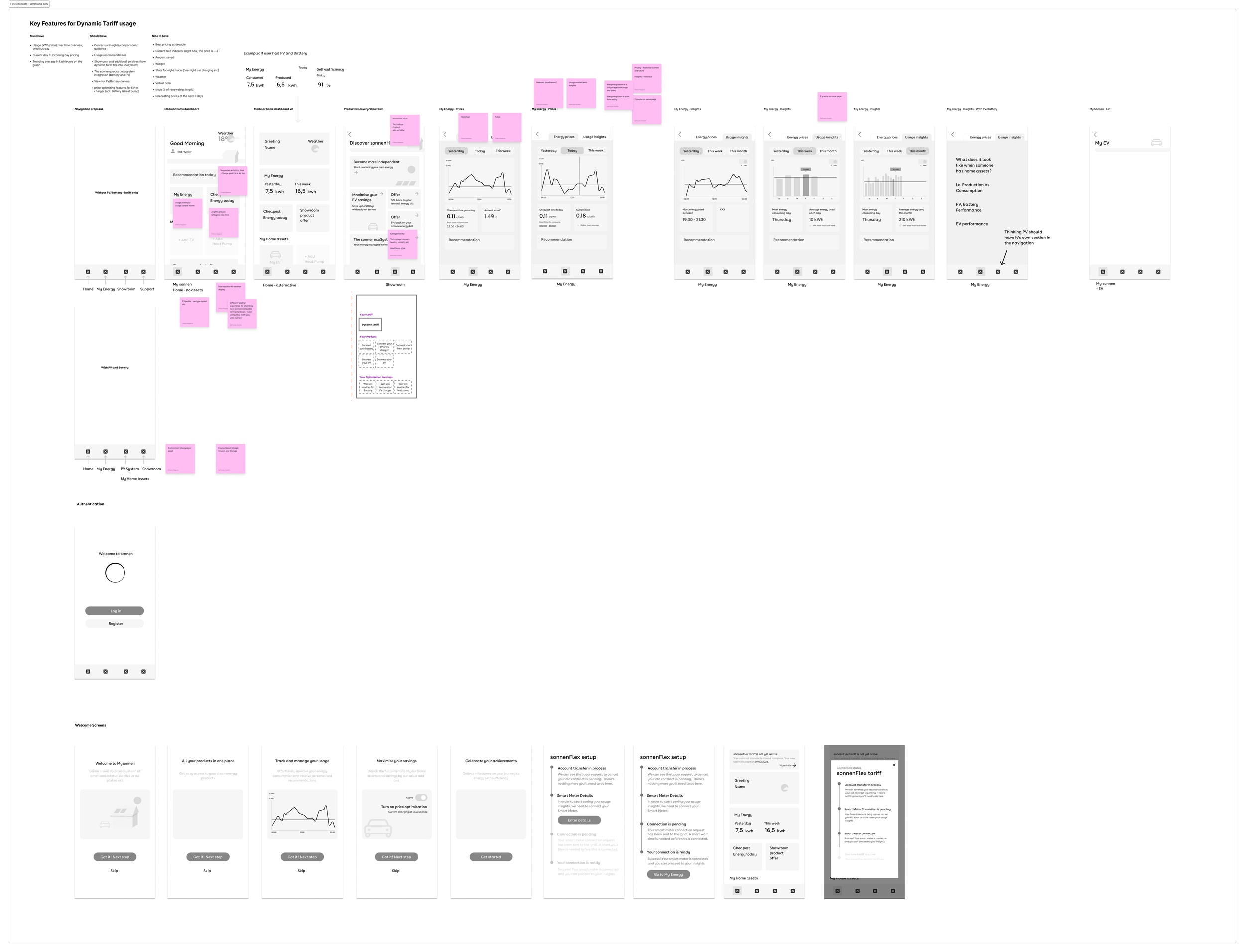
The app shifted towards a utility-centric experience, offering an overview of energy usage. The app's core functionality would display daily energy usage and provide pricing forecasts for the next three days.
The below image captures the early concepts of the apps key pages for showing the dynamic pricing tariff.
Moving to high-fidelity
The dashboard had a tile-based design that gave the users easy view of key information they would need daily, as well as provide quick access into certain areas of the app.
To emphasise that what sonnen offers goes beyond dynamic tariffs, we aimed to showcase the potential for a fully connected, eco-friendly, and automated home. As a teaser, we integrated additional features into the app, such as an EV Charging function, an ‘Explore’ page, and a preview of the apps ‘Solar Simulation’.
For user testing, I elevated the wireframes. Note - these designs weren't refined or officially approved by sonnen's brand or part of a specific design system. I wanted to capture the brand's colours, tone, and general style for the purpose of user testing so it would better resonate with sonnen stakeholders.
Testing in Australia and Germany
We had limited resource for testing, just myself, and our Product Owner. Therefore, we split the testing into two key phases, the first would be moderated testing to test the marketing page, and the second phase would be unmoderated testing to see how users got to grips with the app.
What we were looking for
During testing, our primary focus was to ensure that users not only showed a clear understanding of the dynamic tariff but showed understood the value of the tariff particularly if they already have or are planning to have more home energy assets. For the app, we wanted to see if customers would be motivated to use such a feature within an app that would give them price forecasting and insights on their energy usage.
Phase 2 Unmoderated - App
Using the User-Testing platform, we were able to recruit users from both Germany and Australia to test our designs. The criteria for them to be accepted for the test was that they needed to own a home, be responsible for the decision making on energy plans in their household, and not already have a PV (solar energy) system installed on their property.
Try out the prototype here
Phase 1 Moderated - Marketing Page
The below video shows what the users interacted with during user testing
Key Learnings - Marketing page
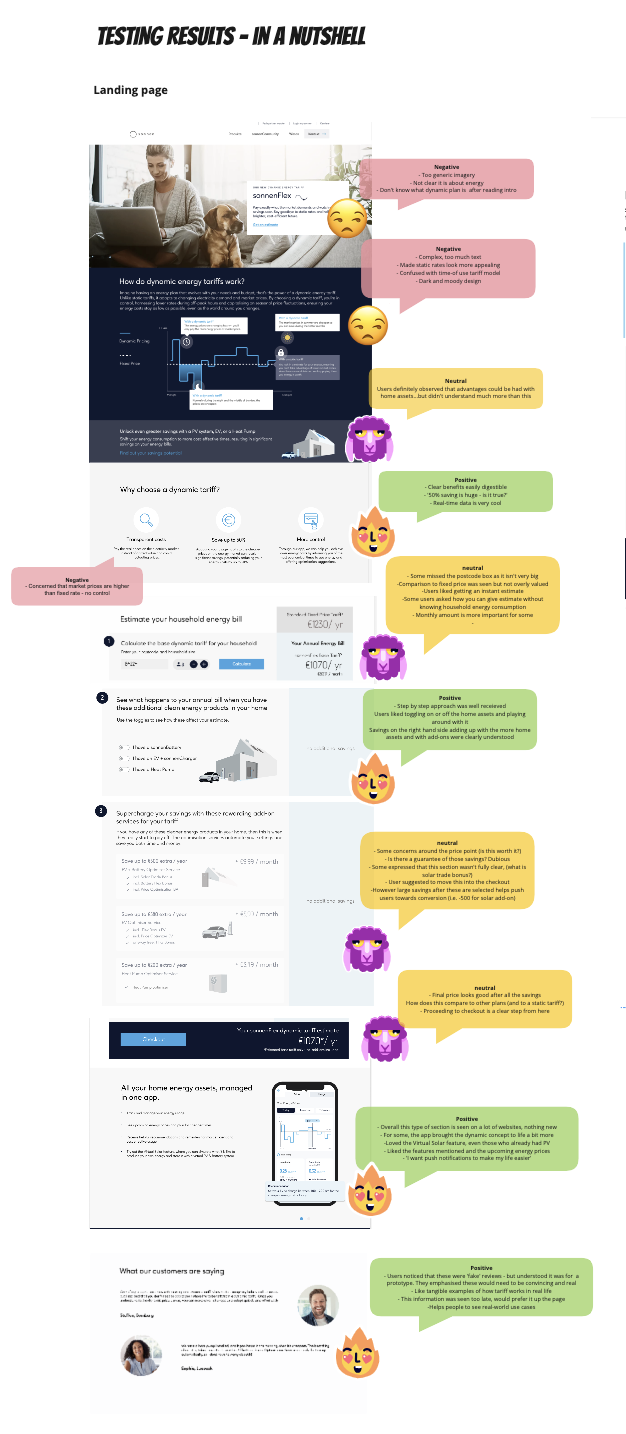
1) Many confused it with an off-peak pricing model:
They found it difficult to extract the core information they needed to know about the benefits of having this tariff, at a glance. Also attempts to visually explain the model using a graph appeared counterproductive, further complicating this for the users.
2) Users clearly recognised the potential of this tariff:
Especially when paired with home energy assets such as solar or electric vehicles. Many expressed a strong interest in delving deeper into this aspect.
3) Users were also heavily focussed on how the prices compared to what was on the market
The users were very price conscious and wanted very basic information like price differences, highlighted clearly on the page. How does it compare to what else they could get right now?
Key Learnings - App
1) Learnings from the marketing page testing that helped us create the desired onboarding experience for the app:
We used the learnings from the first round of testing, to make improvements to the introduction of the dynamic tariff, which helped users better understand it.
2) Using the app made it much easier for customers to understand how the dynamic tariff fits into their daily lives:
They could check pricing forecasts for their energy and get tips on the best times to use it. This gave them a more practical understanding of how the tariff works in real life, which was much more useful than what they saw on the marketing page.
3) Users were very highly engaged with the app overall:
In particular the price forecasting feature and being able to view their energy usage and optimise this to take advantage of lower pricing.
4) The onboarding screens gave them a good overview of the tariff and what to expect from the app:
The missing information we discovered from doing the marketing page testing first, was incorporated into the app experience
5) 95% of users expressed that the app, especially its price tracking feature, would motivate them to become customers of sonnen and adopt the dynamic price offering:
This feedback highlighted a strong connection between the app's features and the users' inclination to embrace sonnen's dynamic pricing.

Final presentation
To wrap up our research, concept development, and design testing, I condensed everything into a brief and easy-to-digest format for sonnen stakeholders. I also came up with a new version of the marketing page, based on all the learnings.
In the final week, we held a session to present a comprehensive deck summarising the entire process. This deck was shared with the team, providing them with the essential discoveries, design concepts, and key learnings as they kick off the development work in 2024.